
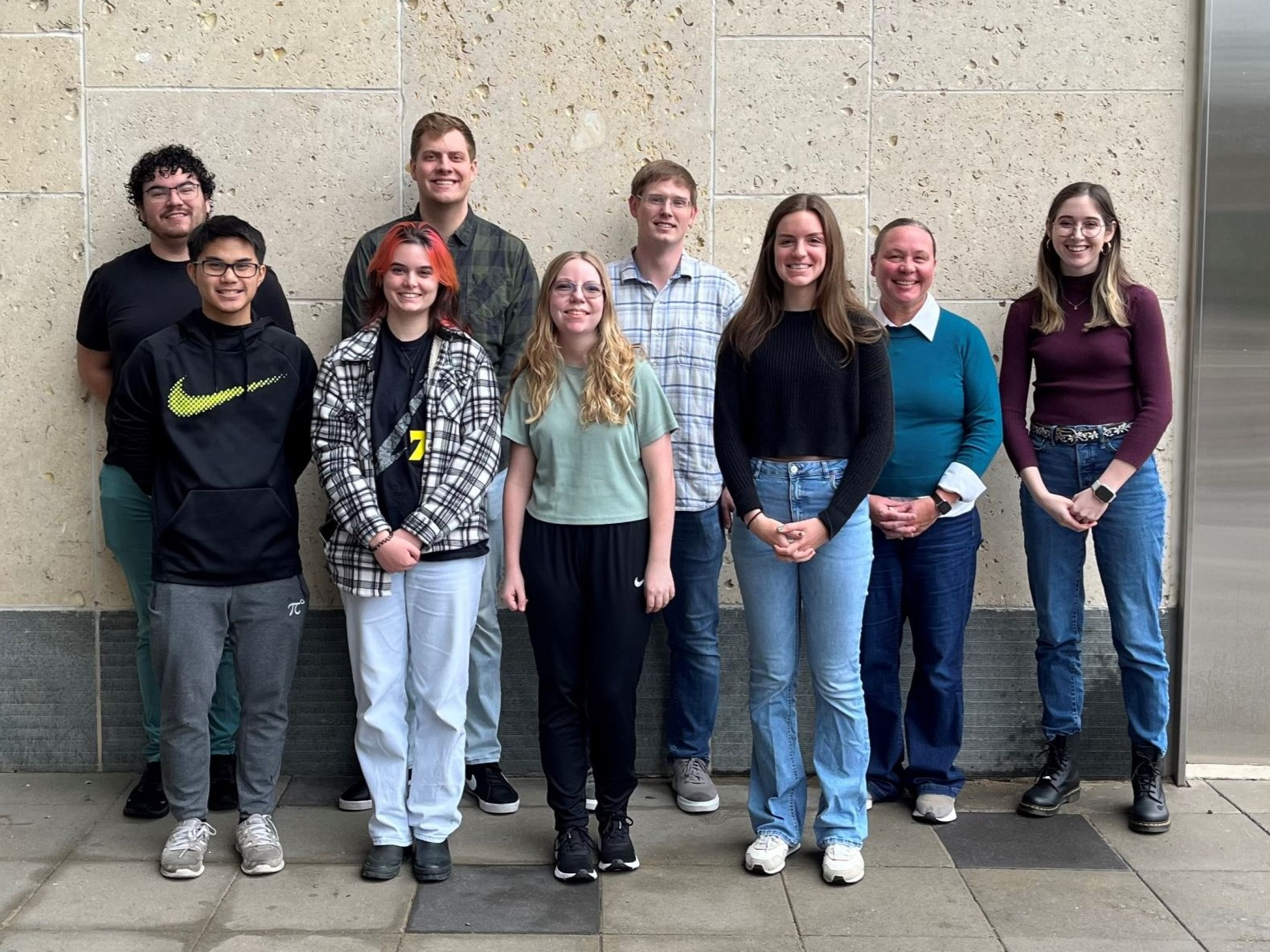
Welcome to the Webb Group
Physical Chemistry of Biological Interfaces
Research in the Webb group seeks to understand and manipulate the mechanisms of interaction, organization, and self-assembly of biological macromolecules that lead to the complex and emergent properties of living systems. We are interested in these topics for two principal reasons. First, understanding the organization of biological systems is of vital biomedical importance. Second, we seek to exploit the weak but long-range interactions involved in noncovalent organization of biological macromolecules at prepared surfaces and interfaces with the ultimate goal of integrating biological and inorganic materials in a controlled and robust manner.
Research in the Webb group is multidisciplinary and employs a variety of physical and analytical techniques. We study the physical chemistry of electrostatic fields at protein-protein interfaces using vibrational spectroscopy coupled with computational methods; and we prepare and characterize chemically modified surfaces that interact specifically with folded, functional proteins using X-ray photoelectron spectroscopy, atomic force microscopy, and surface spectroscopic techniques.
Please visit our research page to learn more about specific projects underway in the Webb group. If you would like to learn more or are interested in joining the group, please contact Dr. Lauren Webb.